
Boredom or a blank sketchbook page
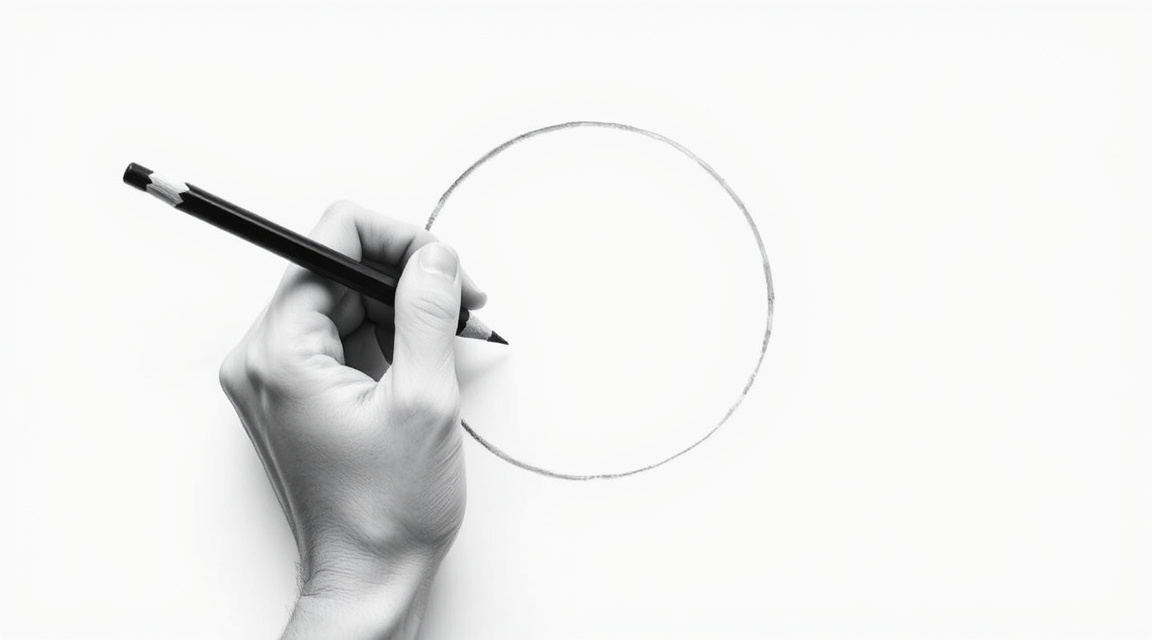
A blank page and no idea what to put on it is the entire problem, and the fix is mechanical rather than creative: open an enumerated list, pick one entry, and draw it before you've had time to second-guess the choice. The reader searching "easy things to draw" is not looking for inspiration in the abstract — they want a short, concrete noun they can commit to in the next sixty seconds.
What makes a subject count as "easy" is rarely spelled out, so here is the working definition this article uses: a subject is easy if it can be built from a small number of closed, simple outlines (circles, ovals, triangles, a handful of straight lines), if it tolerates uneven proportions without looking wrong, and if it has some natural symmetry that forgives a shaky hand. A doodle heart, a lemon, a cactus in a pot and a smiling cloud all pass this test. A hand, a horse in motion or a three-quarter-view face do not — they are commonly filed under "easy" lists anyway, which is misleading for anyone trying to gauge how long a drawing will actually take.
Supplies matter less than most lists imply, but not zero. A soft pencil in the 2B–4B range gives a looser, more forgiving line than an HB, which is worth knowing before a reader blames their hand for a line that's really a hard, scratchy pencil grade. Any smooth cartridge paper around 90–160gsm will take pencil and light pen work without feathering. None of this needs to be expensive — the point is only that a pencil that's too hard makes every "easy" subject harder than it needs to be.
With that settled, the path from stuck to drawing looks like this:
- Pick a category — doodle, flower, animal or face.
- Pick one named subject from that category (not "a flower" generally, but "a five-petal daisy").
- Note the one shape problem it's meant to drill — a circle, an oval, a symmetrical curve.
- Draw it in under five minutes, without erasing the first pass.
- Move to the next item only if you want to, not because a streak demands it.
Lists built for children, such as Domestika's 13 easy drawing ideas, stay short because a child's attention span won't survive a 100-item scroll. Lists aimed at adults filling idle time, like Shihori Obata's collection of 100+ prompts, run long because the audience is browsing, not sitting a lesson. Knowing which kind of list you're using changes how you should use it: a child's short list is meant to be worked through in one sitting; a long boredom list is meant to be dipped into.
Beginner believes they have "no skills"

The belief that a subject is too complex to attempt is almost always a belief about the finished picture, not about the steps that build it. Every recognisable drawing — a cat, a mug, a tree — starts life as two or three basic shapes stacked or overlapped, and the "no skills" barrier disappears once the subject is broken down that way instead of approached as a whole.
ArtfulHaven's list of 28 easy subjects is built on exactly this premise, framing its entries explicitly for readers who don't believe they can draw at all. The method behind it, and behind most beginner-facing guides, is a fixed order:
- Block in the basic shapes — a circle for a head, an oval for a body, a triangle for a roof.
- Connect them with a light contour line, adjusting where the shapes meet.
- Add secondary details — eyes, leaves, wheels — only once the outline reads correctly on its own.
- Darken the final line and erase the construction shapes underneath it.
Three mistakes account for most disappointing results at this stage, and all three are fixable without more "talent" than the reader already has:
- Lopsided circles — drawn slowly, from the wrist, rather than in one continuous motion from the shoulder. A faster, looser first pass is usually rounder than a careful one.
- Off-centre faces — features placed before the head outline is finished, so there's no boundary to measure against. Placing light guide lines (a vertical and a horizontal through the middle of the head) before adding eyes fixes this in one step.
- Pressing too hard — construction lines drawn at full pressure become impossible to erase cleanly. A light touch in the block-in stage, then heavier pressure only on the final pass, keeps the drawing clean.
Adobe's guide to nine easy subjects makes the same point about shape-first construction, and recommends starting with the biggest shape in a subject before any detail is added — a rule that generalises past its nine examples to almost anything on a beginner list.
Reader wants to improve, not just pass time
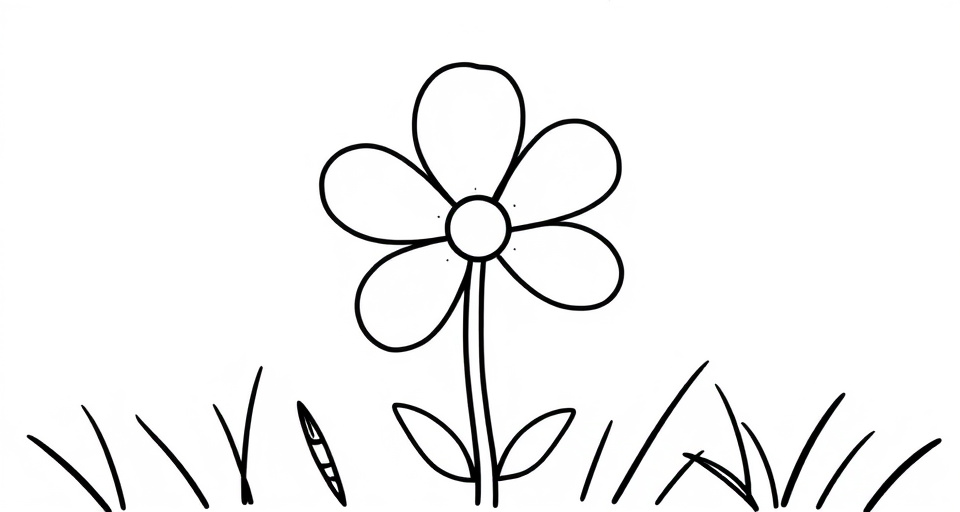
Repeating a handful of easy subjects across several sessions changes line control and shape accuracy in a way that drawing something new each time doesn't. Because the subject is already familiar, the second and third attempts free up attention for the things that actually improve a drawing — pencil pressure, an even contour speed, correcting a proportion that looked off on the first pass.
This is also where "easy" and "cute" need separating, because most lists use them interchangeably and that blurs a genuinely useful practice principle. A subject can be simple — a closed outline, few strokes, forgiving proportions — without being stylised or kawaii. A plain oval leaf is simple; a leaf with a smiling face on it is cute. Practising the plain version builds shape accuracy that transfers to other drawing; the cute version mostly builds familiarity with one decorative style. Both have a place, but a reader trying to build skill rather than fill a page should weight practice toward the plain, structural version of a subject before decorating it.
Repetition also sets up harder subjects. A hand is commonly listed next to circles and flowers as though it belongs in the same difficulty band, but a hand has far more internal proportion relationships — finger length against palm width, knuckle spacing, an angle that changes with every gesture — than a five-petal flower or a closed animal outline. Readers who have logged real repetitions on doodles, flowers and animal shapes are the ones who find a hand approachable rather than demoralising, because they've already practised the underlying skills a hand actually calls on: circles and ovals for the palm and finger segments, symmetry checks, and steady line confidence. Treating hands as a later milestone rather than an equal-difficulty list item is a more honest way to plan practice than lumping them in with a teacup.
The bridge from copying a list to drawing from imagination or observation is the last step this progression is building toward. Once a subject has been copied from a prompt several times, the next useful move is to draw the same subject without the prompt in front of you — from memory, or from a real object on the desk. That single change, repeated across the categories below, is what turns a list of fifty prompts into a practice routine instead of fifty one-off pictures.
Doodle
A doodle is a loose, small drawing made without planning, and its entire value is that it removes the decision-making step that stalls most beginners. Because nothing about a doodle is meant to be corrected or measured, it's the fastest category on this list — most of the following take well under a minute:
- Squiggle-to-shape — draw a random scribble, then find and outline a face or animal hiding in it (trains loose observation).
- Spiral — one continuous inward line (trains steady, even pressure).
- Zigzag border — a repeating triangle wave along a page edge (trains consistent angle).
- Speech bubble — an oval with a small triangle tail (trains closed-shape confidence).
- Star burst — overlapping straight lines from a single point (trains radial symmetry).
- Smiling cloud — a bumpy oval outline with two dots and a curve (trains freehand curves).
- Heart — two joined arcs meeting at a point (trains mirrored curves).
- Coffee cup with steam — a rectangle, a handle loop, two wavy steam lines (trains proportion between a container and its contents).
- Raindrop — a teardrop outline (trains a single tapering curve).
- Checkerboard patch — a small grid with alternating fill (trains straight-line spacing).
- Arrow — a shaft and a triangular head (trains angle consistency).
- Musical note — an oval with a stem and flag (trains combining a curve with a straight line).
Flower
Flowers appear on every major easy-drawing list because a flower's structure — a centre point with repeating petals — is symmetry doing most of the work for the artist. Getting one wrong is hard to do badly enough that it stops looking like a flower.
- Five-petal daisy — a circle centre with five overlapping ovals (trains radial symmetry).
- Tulip — three joined curves forming a cup shape on a straight stem (trains a single closed curve).
- Sunflower — a circle with pointed petal shapes around the rim (trains alternating shape repetition).
- Rose (simplified spiral) — a continuous curling line from centre outward (trains controlled spiral pressure).
- Cherry blossom — five small rounded petals with a notch at each tip (trains small repeated shapes at scale).
- Cactus flower — a star-shaped bloom on top of a rounded cactus body (trains combining two closed shapes).
- Daffodil — a trumpet centre inside six pointed petals (trains layered symmetry).
- Leaf cluster — three pointed ovals fanning from one stem point (trains angle variation from a fixed origin).
- Potted succulent — a triangle pot with layered rounded leaf shapes (trains stacking simple shapes into one subject).
- Vine with leaves — one wavy line with small ovals branching off (trains a continuous line with attached detail).
- Four-petal blossom — a simple cross of four rounded petals (trains basic quadrant symmetry).
- Flower crown segment — three or four small blossoms linked by a curved stem (trains repeating a learned shape in sequence).
Animal
Most easy animal subjects reduce to the same construction: a circle or oval for the body, a smaller circle for the head, and a few short lines or triangles for legs, ears and a tail. Once that pattern is recognised, the category stops being a list of different animals and becomes one shape-combination drill repeated with different accessories.
- Sitting cat — an oval body, a circle head, triangle ears, a curved tail (trains combining rounded and pointed shapes).
- Owl — a large oval body, two circle eyes, a triangle beak (trains scale relationships between shapes).
- Fish — an oval body with a triangle tail fin (trains asymmetry within a mostly closed shape).
- Snail — a spiral shell on an elongated oval body (trains combining a spiral with a curve).
- Bird in flight — a wide "M" shape with a small oval body (trains a single confident gesture line).
- Turtle — a domed oval shell with four short stub legs (trains even spacing around a central shape).
- Ladybird — a circle divided by a centre line with dot spots (trains a bisected shape).
- Fox face — a triangle-heavy head with pointed ears (trains angular symmetry, as a contrast to round animal heads).
- Whale — one long curved body shape with a small fin (trains a single elongated contour).
- Hedgehog — a rounded body outline with short radiating spike lines (trains texture built from simple repeated strokes).
- Elephant (front view) — a large oval head, two big ear circles, a curved trunk line (trains proportion between a big shape and a thin appendage).
- Penguin — a rounded triangle body, oval belly patch, small wing shapes (trains layering shapes of different sizes).
- Butterfly — two mirrored wing shapes either side of a thin body line (trains mirror symmetry across a vertical axis).
- Sleeping dog — one long curved outline with no visible legs (trains simplifying a subject down to its silhouette).
Face
Simplified cartoon faces are listed far more often than realistic ones, because a cartoon face drops most of the proportion checks a portrait needs and keeps only a few placement decisions: where the eyes sit relative to the centre line, and how big the features are relative to the head outline.
- Basic cartoon face — a circle with a horizontal and vertical guide line, dot eyes, a curved smile (trains centring features on a blank shape).
- Winking face — one open dot eye, one closed curved-line eye (trains asymmetry used deliberately, once symmetry is understood).
- Surprised face — wide oval eyes, a small "o" mouth (trains exaggerating a shape for expression).
- Side-profile face — a rounded outline with a single bump for the nose (trains a continuous, unbroken contour line).
- Sleepy face — closed curved-line eyes, a small open mouth (trains reading expression from line shape alone, without pupils).
- Robot face — a square head, rectangular eyes, straight-line mouth (trains substituting straight edges for a normally rounded feature).
- Cat-style face — a rounded head with two pointed ears and whisker lines (trains adding species detail onto the same base circle used for a human cartoon face).
- Baby face — a wide, low head shape with features placed in the lower half (trains adjusting proportion rules to change perceived age).
- Angry face — angled eyebrow lines over dot eyes, a downward curved mouth (trains reading how a few short lines change an expression).
- Star-eyed face — small star shapes replacing dot eyes (trains substituting a learned doodle shape into a face template).
- Ghost face — a rounded top on a wavy-bottomed outline, with simple dot eyes (trains combining a face template with a non-human body shape).
- Ice cream cone face — features added to a triangle-and-scoop shape (trains applying the face-placement rule to an object rather than a head).
Pick one entry, set a five-minute limit, and draw it without erasing the first line — the next blank page is the only test that matters.